Showing posts with label raised beds. Show all posts

Thursday, January 26, 2012

The Raised Bed Club

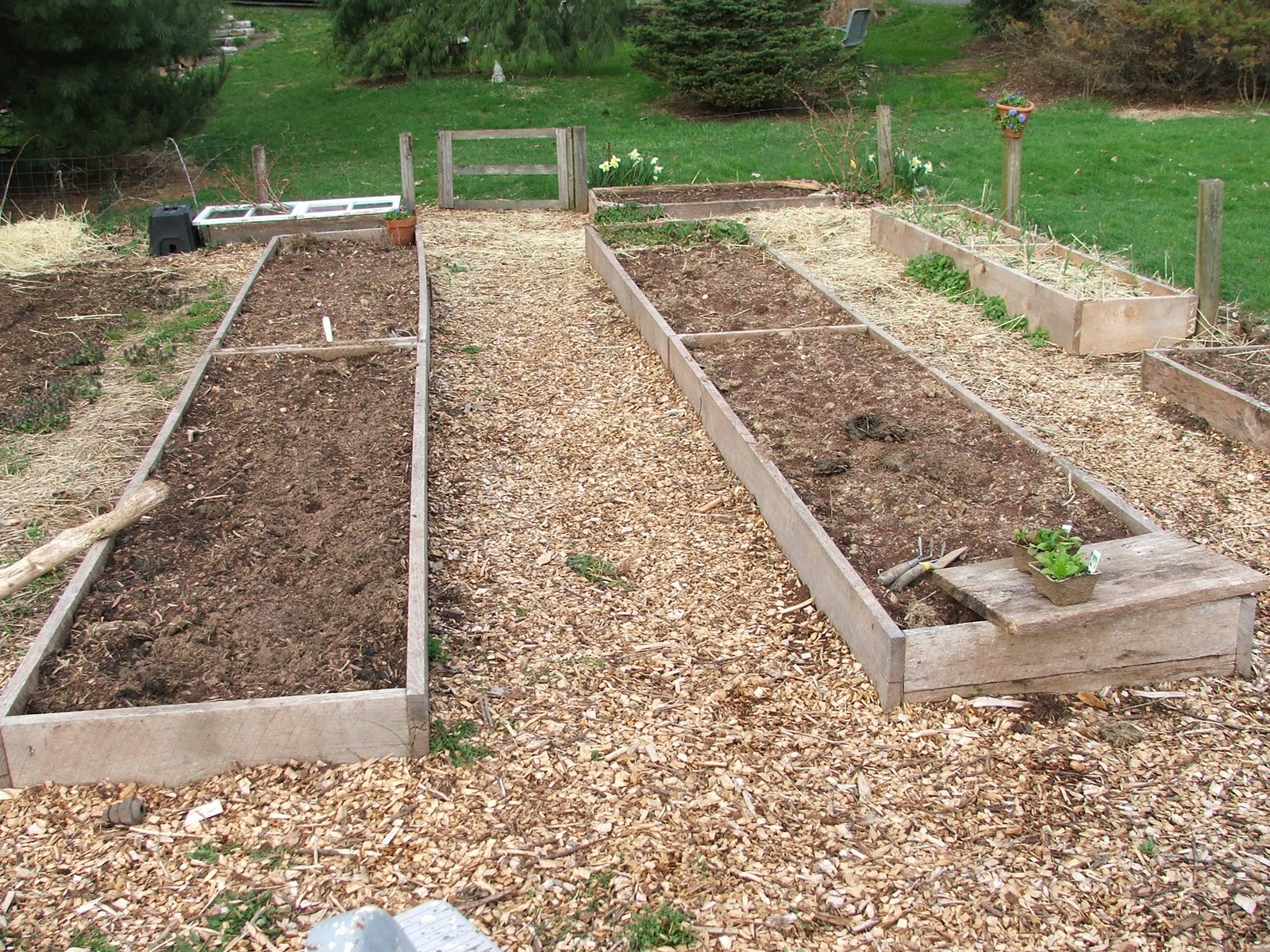
My pal Harry called recently to tell me that he had located some rough cut, white oak boards to build raised garden beds. We discussed board dimensions, how to fasten them together, what to fill the new beds with. I knew that Harry was about to become a member of the Raised Bed Club. I have been a member for about 15 years and it is probably the single most productive gardening step I’ve ever taken. I’ll outline some of the benefits and details here. If you want to take your vegetable gardening to another level, consider raised beds.


So, what’s the big deal with raised beds? For many of us (and certainly my original motivation) it is to gain the ability to garden in poorly drained soils… or to get access to garden soil earlier in the season. Raising the soil profile even a few inches creates gravitational pull on water that leaves it better drained. Many folks think that it is the media in the bed that is creating all of that drainage, and to certain extent, it does play a role. But even raising the existing soil on a site improves drainage dramatically. And if you are worrying about the task of importing a lot of stuff to fill you new raised bed… stop. You can accomplish a lot by simply using the existing soil.

Now, to talk out of both sides of my mouth, as they say…. let’s not ignore the potential to really improve soil texture and structure by amending that stuff we’ll fill those beds with. If you can add good organic matter to your existing garden soil in a raised bed you will see additional benefits. Where do you go for good organic matter? It’s everywhere. If you live in Southeastern Pennsylvania you are within an hour’s drive of some of the best compost money can buy. And sometimes it’s free! Spent mushroom compost is a beautiful thing. Many garden centers sell it. As you get closer to Kennet Square in Chester County it becomes more plentiful and cheaper. Since this stuff is often a waste product of the mushroom industry, there are mountains of it. It is simply the growing medium that several crops of mushrooms have been living in. It is high in organic matter and nutrients. Mix about 25 % mushroom compost, by volume, into even the crummiest soil and you have a decent growing media. Sure, do a soil test after you make this mix and adjust as necessary but that mushroom soil is nutrient rich and near neutral pH.

Composted leaves are stockpiled in many communities. While these will be less nutrient rich than mushroom compost, they do provide wonderful soil textural qualities. Again, adding about 25 %, by volume, is a good start.

Manure is magnificent. Find one of those old barnyard piles that has been ageing like a fine wine and you have hit the jackpot.

OK you get the idea. Find some organic matter. Amend your existing soil by incorporating about 25 % of what you can find with the existing soil. Then soil test and adjust fertility as needed. This will get you started. As time goes by you will fine tune that media in the beds. It will settle and shrink over time so yearly additions are needed.

Some garden centers and mulch suppliers sell a garden soil mix in bulk, by the cubic yard. Most will deliver. Tell them your bed dimensions and they will tell you how much you need. A bed that measures 8 feet by 3 feet by 9 inches will require 18 cubic feet… less than a cubic yard (27 square feet).

Rock raised bed
Wooden boards are probably material most people use to construct beds but many things can do the job. Rocks work. So do concrete blocks. I suppose you could use the fancy fake rock wall materials that are so popular. Metal, plastic, you name it. In fact, a raised bed can be borderless if you’d like. But the tidiness of wooden raised beds is nice. What kind of wood? Since there will definitely be contact with soil, a rot resistant wood is important if you want the beds to last more than a couple of years. Pressure treated wood sold these days does not contain arsenic.

Borderless Bed
Copper is used instead to resist the rots. Got old pressure treated wood with arsenic? There is pretty good evidence that this does not pose a great threat, but if you are going to spend one moment worrying about it (or trying to convince someone else who eats from your garden that all is fine by explaining the chemical qualities of arsenic) maybe it is a better idea to make a set of stairs out of those old pressure treated boards.

Black Locust Beds
Or… you can use naturally rot resistant wood. Black Locust is probably the most rot resistant species you can find locally. White oak is OK. If you have unlimited funds, Cedar and Redwood are sold. You’ll find locust and white oak at Pennsylvania sawmills. Yes, there are still sawmills around. I have 15 year old white oak beds that are just now breaking down. I expect the locust beds to be heirlooms.

Warped bed Board
The bed length is up to you but the longer board the more expensive they get. You can butt ends of individual beds together, as needed, if you have a big garden and want lots of gardening capacity. Bed width… you want to be able to reach across the bed from either side. Three feet wide is good. Wider is a stretch. Literally. If you don’t mnd working from both sides of a bed make them five feet wide. Board width…a full one inch board width will serve you well.

Locust is like concrete and must be pre-drilled in order to fasten end together. Screws are better than nails. Exterior grade screws are best. Plan to assemble you beds immediately after purchasing the boards at a sawmill, unless the boards have been properly dried, otherwise warping will make this impossible later.

How deep should the bed boards be? Six to eight inches is enough. More is a better but the boards will get expensive. Want deeper beds? Make them the identical dimensions and stack them on top of each other.

Hoops and Plastic make a Mini Greenhouse out of a Raised Bed
It is hard to believe that raising your garden surface less than a foot would yield huge benefits…. But it does. You’ll find gardening gets easier and your efforts are more productive. Your fingers are all you need to plant and weed. You will probably find yourself making low covered tunnels to extend the growing season and seeding crops like lettuce in solid beds instead of rows. You’ll make a cold frame instantly by covering a raised bed with a discarded window. You’ll be gardening earlier and later in the season… harvesting lettuce for Thanksgiving… or Christmas!

Ready for a new gardening adventure? Make a couple of raised beds.

Disarded window makes a cold frame out of a raised bed!


For a nice publication on the subject, see this from Missouri xtension.

Monday, June 30, 2008

Graham's Garden Inspirations


Sometimes you have to get out of your own back yard to get new gardening ideas. Every year I visit my good friend and gardener extraordinaire, Graham (Crackers) Bell for inspiration. I got started with raised beds years ago after seeing his. He showed me how easy it is to grow garlic. He has made me a passionate advocate for composted sheep manure. So, when I make my annual visit to his Rhode Island garden, I expect to see something new and useful.


This year it was the tomato support systems. One nifty trick was planting the tomatoes near a fence and then snaking soft twine around the stems as they grow. Tie off the other end to a fence. The other was a two-tiered, heavy gauge, wire combo that the plants grow through (just double click on these images for a detailed look). Both beat the stake and twine system I use. I guess what really matters is getting the plants off of the ground. If you aren't staking your tomatoes give it a try. Yes, you can buy cages and pre-made made systems. But as you can see, devising your own can be just as good. One of the benefits of staking is improved air/light circulation around plants which leads to reduced disease. Also, tomato fruit are lifted off the ground which lessens slug damage and soil borne disease contamination.
Recently, I blogged on and on about raised beds. Check out Graham's rock-raised beds and that beautiful garlic. Well, those are a few of the gardening highlights from my pilgrimage to garden Guru Graham. Next year I hope to master his technique with the martini shaker and find out how to grow borage.


P.S. On my return to Pennsylvania I found Japanese Beetles feasting on my Zinnias and red raspberries. More later on beetle management but if you are seeing beetles on you plants, act now before they invite friends to their dinner party.

Monday, June 16, 2008

Love those raised garden beds


How do I love thee... let me count the ways:


You are always mellow.


You are twice as productive as my ex.


You are warm and mosit, but never wet.


I don't have to bend over ( forwards or backwards ) to work with you.


Yes, I am in love with my raised garden beds. And anyone I know who has started gardening in raised beds never goes back to "in-ground" growing. So, there has to be something to it. Let's take a closer look at what makes this such an easy and productive gardening style.

First, let's define raised bed. It is simply soil (or other growing media) raised above the natural grade of the soil. Farmers find that raising planting beds, even just a few inches, results in improved yields and quality. Check out those fields of melons, tomatoes and strawberries some time you're near a farm. You'll see what I mean. Home gardeners usually go a step farther... raising the beds eight, twelve or even twenty-four inches above ground level.

Why are raised beds so productive? Most of it has to do with the soil. Soil in a raised bed drains better (gravity at work). And poor drainage is a major reason for plant failure. Raised beds warm up more quickly in the spring, allowing for early planting and growth. Soil in raised beds is spared the compaction that occurs when we garden "in-ground". Think about how hard bare soil becomes when it is walked on repeatedly. Then you use a tiller to relive the compaction, which further destroys soil structure, and on and on....You won't be walking in the raised beds. And your tillage implements are likely to be your fingers. Very handy. They are always where you can find them.

You get to radically amend the soil that the beds contain. A good rule of thumb is to use about 1/3 to 1/2 of your native soil and mix it with good, finished compost. This results in a very mellow ( soft, loose crumbly) growing medium that plants love. Organic gardeners can boost soil fertility by choosing composts with high levels of plant nutrients (aged manures). Even lousy, clayey soils or uber-porous soils are improved in this way because of the magical properties of organic matter... it aerates heavy/clayey soils and improves moisture holding capacity of light/sandy soils.

OK, you've got a well-drained, aerated, moisture-holding, warm growing medium. If you're a plant, what's not to love? A little fertility (organic or otherwise) and you're going to grow to your full potential...at least until the rabbits, ground hogs, bugs and diseases appear. But that it another story.

What are raised beds structures made of and how big should they be? Here is where you can get creative. No one says they have to be square or rectangular. If that works for you, fine. A buddy of mine has serpentine raised beds made of rocks. Beautiful and functional. I've got beds made of black locust, dawn redwood and white oak. Make them any dimension you want but here are a few tips. Don't make them any wider than twice your reach or you won't get to the middle. Even this may be a stretch. So a maximum width of forty-eight inches makes sense and there is nothing wrong with beds as narrow as twelve inches. I think mine are thirty-six. If I stretch I can reach the other side. How about height? Eight to twelve inches seems to be common. Six is OK and you can stack beds and make the whole thing as high as you want. It is lovely to garden standing up.... or sitting in a chair. If you end up with the typical, low bed, get one of those cushioned pads to kneel on and you're in business.

What kind of wood should you use? I won't enter the pressure treated lumber controversy. Lumber treated with copper, chromium and arsenic (CCA) was popular for years. Certainly plants had no problem with it (unlike wood treated with creosote or pentachlorophenol). Yes, arsenic is a toxic substance but it is likely that your exposure to this was minimal. Now, other preservatives are available and CCA is not an option unless you inherited some. After many long conversations with gardeners about the relative hazard of CCA treated wood I came to this conclusion: anything that takes away from the potential for you to enjoy your garden (or is going to make you gag as you bite into your first born beet) ain't worth the benefits. So just find a material that you are comfortable with. There are lots of options. If you can find black locust and have the patience and strength to make beds out of it... your great grand children can use them. Put it in you will. Don't ask me where I got my twelve-inch dawn redwood boards. I ain't telling. It is light, apparently durable and a pleasure to nail and screw. Time will tell if it will compete with black locust for durability. I kind of doubt it. Saw mills are getting few and far between but they are still out there and can sell you rough cut lumber for beds. Hey, you can order pre-cut, rot resistant cedar boards for raised beds on-line if you have the money. You've got options. Cement blocks work.

A few final things that make raised beds fun. You can convert a raised bed to a cold frame easily by attaching something that will support light transmitting plastic. Beds become mini-greenhouses for pennies. Now you are extending your growing season dramatically. Floating row covers work nicely too but offer less heating potential.

Weeding, a chore even for garden fanatics, is so much easier in raised beds. Weeds still emerge but pulling them is child's play. And because your crop plant density is so much higher in raised beds, their competition reduces weed growth dramatically. By the way, this plant density accounts for much of that two-fold yield increase over in-ground gardening.

Tools get smaller. There are nifty cultivation and planting tools for raised beds. Nothing is motorized. And fingers can do most of the planting. Instead of a hoe you'll be making seed planting rows with your pinky.

I suppose I could go on and on but those are the high points.


Any downside to raised beds? Well, despite all of that nice organic matter, raised beds do dry out quickly. So watering becomes important. Maybe even critical. Since they have high organic matter content the contents of the beds "shrink" during the course of the year as the organic matter decomposes. So you have to refill beds annually. Do it in the fall after the harvest season and let Mother Nature get things setteld in over winter. Other than that, I can't think of a negative. And even watering is really just adding a level of garden management that pays off.

Ok I gotta go. I have a date with Romaine.